About 187 minutes
Tom Grogan — Edition Insights
Young Readers Enchanted Adventures
42,899 recorded words. 26 minutes difference from this book's estimate.
View Gutenberg source #850
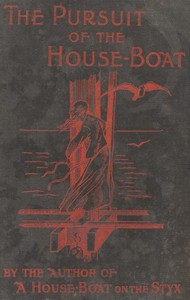
The catalog record for The Pursuit of the House-Boat — A Closer Reading provides practical reading context through 36,817 words, 2 hr 41 min estimated reading time, and 4 detected text sections.
The text analysis averages about 18.0 words per sentence, while the detected sections provide another way to judge how the source is divided.
Project Gutenberg metadata also associates the work with “Holmes, Sherlock (Fictitious character) -- Fiction,” connecting these edition facts with the source record’s subject description.
Explore this collection
These alternatives are selected using recorded categories and estimated reading time.
About 187 minutes
Young Readers Enchanted Adventures
42,899 recorded words. 26 minutes difference from this book's estimate.
View Gutenberg source #850About 191 minutes
Young Readers Enchanted Adventures
43,724 recorded words. 30 minutes difference from this book's estimate.
View Gutenberg source #2588About 213 minutes
Young Readers Enchanted Adventures
48,770 recorded words. 52 minutes difference from this book's estimate.
View Gutenberg source #2789Search stored excerpts and compare books → Choose by your preferences →
Choices use stored catalog measurements. Estimates vary with reading speed. A shared category is a catalog label, not a claim that two books have the same argument or literary quality.
Search reads excerpt text stored with this catalog and links to its associated Gutenberg record. The connection is stored in the site database; this tool does not recheck that every excerpt is word-for-word identical to that external record. Excerpt search does not cover every chapter and does not verify historical publication dates.
Catalog snapshot checked: 2026-09-25. Coverage: 93 public books, 93 available source excerpts.
Read the complete public-domain text at its original source.
Read on Project GutenbergThe pursuit begins not with a chase but with a committee meeting. The Associated Shades, a club of famous ghosts, discover their house-boat has been stolen by Captain Kidd, who has also taken all the women of Hades. The opening chapter establishes a tone of mock-heroic grievance: the shades are less concerned with the theft than with the loss of female society, which leaves them “desolate.” This sets up a structure where the quest is driven by comic self-interest rather than noble purpose.
The narrative introduces a large cast of historical and fictional figures, including Sherlock Holmes, Hamlet, Sir Walter Raleigh, and Charon. The theft of the house-boat and the abduction of women like Queen Elizabeth and Xanthippe create a premise that is both absurd and structurally neat: the men must band together to retrieve both their property and their companions. The humor derives from the juxtaposition of these iconic figures with mundane concerns—Holmes offers business advice, Charon haggles over charter fees, and Hamlet worries about honesty. The setting shifts between the underworld and the open sea, allowing for a variety of comic encounters.
When the shades try to charter Charon’s ship, the Gehenna, they encounter modern corporate obstacles. Charon, now president of the Styx Navigation Company, pleads fiduciary duty and stockholder interests, even claiming he may have been sold out by his brokers. This satirizes contemporary business practices, with Holmes advising them to “meet modern business methods with modern commercial ideas.” The negotiation scenes are built on wordplay and logical loopholes, such as Holmes’s suggestion to give a check drawn to Charon’s order, making him responsible upon endorsement. The humor lies in the anachronistic clash between ancient mythological figures and late-19th-century capitalism.
The house-boat itself is a recurring image: a floating clubhouse that represents both community and mobility. Its theft transforms it into a prize to be pursued, and the chase structure drives the narrative forward. The sea becomes a space for adventure, with the shades chartering the Gehenna and setting off. The illustrations listed in the contents—such as “Captain Kidd Meets with an Obstacle” and “Marooned”—suggest a series of episodic encounters. The movement between scenes is rapid, shifting from council meetings to shipboard negotiations to confrontations, maintaining a brisk pace that mirrors the pursuit.
The dialogue is the primary vehicle for humor and characterization. Each figure speaks in a recognizable style: Holmes is laconic and pragmatic, Hamlet is philosophically hesitant, and Charon is evasive and self-serving. The exchanges are often built on logical traps and verbal sparring, as when Charon deflects Raleigh’s questions about stock ownership by claiming he hasn’t “seen the transfer-books lately.” The author uses these voices to parody both the original characters and contemporary social types. The dialogue also advances the plot, as decisions are made through argument and persuasion rather than action, reflecting the book’s emphasis on wit over physical conflict.
Although the women are abducted early on, they remain a constant reference point. Their absence motivates the entire plot, yet they are never directly seen in the excerpts. This structural choice keeps them as a goal rather than participants, allowing the male characters to dominate the action. The women are described as “strong-minded and beautiful,” and their capture is treated as both a loss and a nuisance. The narrative does not explore their perspective, focusing instead on the men’s efforts to retrieve them. This asymmetry is typical of the period’s adventure stories, but here it is undercut by the satirical tone, which may invite readers to question the heroes’ priorities.
Readers should approach this book as a comedy of manners set in the afterlife, where the pursuit is less about action than about negotiation and repartee. The structure is episodic, with each chapter presenting a new obstacle or character interaction. Pay attention to how the author uses anachronism and parody to comment on contemporary society, and note that the women, though absent, are the linchpin of the plot. The humor rewards familiarity with the historical and literary figures, but the satire of bureaucracy and business is accessible to any reader.
Some stories settle in quietly, like the odd fellowship of shades chasing a stolen clubhouse—absurd yet oddly tender. That lingering ache reminded me of another, darker walk through morality and consequence, where every choice leaves a permanent mark. It’s in Life and Death of Mr. Badman — Story, Setting & Ideas, that same patient weight of watching lives unfold, no rush, just truth.
Save your reaction, strongest insight, and memorable passage.