
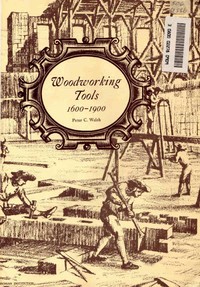
Woodworking Tools 1600-1900 by Peter C. Welsh
Peter C. Welsh’s book isn’t a novel, but it tells a gripping story. It chronicles the 300-year evolution of woodworking tools in America, from the basic axes and saws of early settlers to the specialized, mass-produced tools of the late 1800s.
The Story
The book follows a clear timeline. It starts in the 1600s, showing how settlers relied on a few versatile, often hand-forged tools to survive and build their homes. As we move into the 1700s and the birth of the nation, we see tools become more refined and specialized, reflecting growing craftsmanship and trade. The real turning point comes with the 1800s and the Industrial Revolution. Welsh shows how factories began producing standardized tools, changing them from personal, crafted items into affordable commodities. The story ends around 1900, on the cusp of the electric age, leaving you to ponder the immense journey from the blacksmith’s anvil to the factory floor.
Why You Should Read It
What makes this book special is how it connects objects to people. Welsh doesn’t just describe a molding plane; he explains what it meant for a joiner’s business and how its design shifted with architectural styles. You start to see a hand saw not just as a tool, but as a piece of technology that shaped (literally) the rooms we live in. It makes history tangible. You’ll never look at an old chair or a historic building the same way again—you’ll see the choices and the skill of the person who made it, guided by the tools of their time.
Final Verdict
This is a perfect read for anyone with a curious mind about how things were made. It’s a must for woodworking enthusiasts, of course, who will geek out over the detailed descriptions. But it’s also great for general history lovers, antique hunters, or anyone who enjoys ‘how we got here’ stories. It’s accessible and packed with insight, proving that sometimes, the most profound stories are found not in grand events, but in the well-worn handle of a common tool.
This historical work is free of copyright protections. It serves as a testament to our shared literary heritage.
Oliver White
10 months agoUsed this for my thesis, incredibly useful.
Emma Wright
1 year agoI stumbled upon this title and the atmosphere created is totally immersive. Truly inspiring.
Jessica Davis
1 year agoI stumbled upon this title and the plot twists are genuinely surprising. Don't hesitate to start reading.
David Wright
1 year agoThis is one of those stories where the narrative structure is incredibly compelling. I will read more from this author.




Charles Martin
10 months agoI didn't expect much, but it creates a vivid world that you simply do not want to leave. I learned so much from this.