
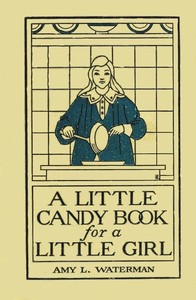
A Little Candy Book for a Little Girl by Mrs. Amy Harlow Waterman
Let's clear something up right away: this isn't a novel. 'A Little Candy Book for a Little Girl' is a charming, step-by-step recipe book published in the shadow of World War I. It was part of a popular series of activity books for children.
The Story
There's no plot in the traditional sense. Instead, the 'story' is the journey from raw ingredients to finished treat. The book is framed as instructions from an experienced adult (Mrs. Waterman) to a curious child. It starts with the simplest of candies—pulled molasses taffy—and gradually introduces more involved recipes like chocolate fudge and 'opera creams.' Each recipe is a small project, emphasizing careful measurement, patience (especially when waiting for syrup to reach the right temperature!), and the fun of shaping the final product. The 'characters' are the young cook and her helpful, guiding voice.
Why You Should Read It
I loved this book for its sheer sincerity. It doesn't talk down to its young audience. It assumes intelligence and capability. In an age of instant gratification, there's something profoundly satisfying about its core message: the best rewards often come from the work of your own hands. The recipes are historical artifacts themselves, calling for ingredients like 'XXXX confectioner's sugar' and assuming you have a coal or wood stove. Reading it made me want to try the recipes, not just for the candy, but to connect with that specific, hands-on moment in time. It's a beautiful reminder of how everyday skills like cooking were once central to family life and childhood education.
Final Verdict
This book is a perfect little treat for specific readers. It's ideal for history lovers, especially those interested in domestic life and childhood in the early 20th century. Parents or grandparents looking for a unique, old-fashioned activity to do with kids might find inspiration here (with modern safety adjustments for the stove parts!). It's also great for anyone who appreciates vintage books and the simple, practical prose of that era. If you're looking for a sweeping narrative, this isn't it. But if you want a genuine, sweet-smelling portal to the past, you can't do much better than this little guide.
This work has been identified as being free of known copyright restrictions. It serves as a testament to our shared literary heritage.
Jennifer Thompson
10 months agoThis is an essential addition to any academic digital library.
Jennifer Anderson
9 months agoFrom the very first page, the pacing is just right, keeping you engaged. Definitely a 5-star read.
Betty Flores
5 months agoHigh quality edition, very readable.
Barbara Garcia
10 months agoThe balance between academic rigor and readability is perfect.