About 320 minutes
The tavern knight — Text and Context
Exploration Survival Adventure Tales
73,584 recorded words. 15 minutes difference from this book's estimate.
View Gutenberg source #3030
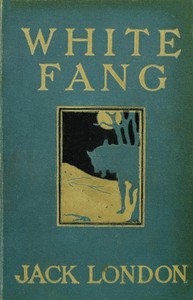
Before opening White Fang — Text and Context, the edition data offers a quick orientation: 76,937 words, 5 hr 35 min estimated reading time, and 26 detected text sections.
The text analysis averages about 16.0 words per sentence, while the detected sections provide another way to judge how the source is divided.
Project Gutenberg metadata also associates the work with “Wolfdogs -- Fiction,” connecting these edition facts with the source record’s subject description.
Explore this collection
These alternatives are selected using recorded categories and estimated reading time.
About 320 minutes
Exploration Survival Adventure Tales
73,584 recorded words. 15 minutes difference from this book's estimate.
View Gutenberg source #3030About 309 minutes
Exploration Survival Adventure Tales
70,845 recorded words. 26 minutes difference from this book's estimate.
View Gutenberg source #1611About 376 minutes
Exploration Survival Adventure Tales
86,335 recorded words. 41 minutes difference from this book's estimate.
View Gutenberg source #2687Search stored excerpts and compare books → Choose by your preferences →
Choices use stored catalog measurements. Estimates vary with reading speed. A shared category is a catalog label, not a claim that two books have the same argument or literary quality.
Search reads excerpt text stored with this catalog and links to its associated Gutenberg record. The connection is stored in the site database; this tool does not recheck that every excerpt is word-for-word identical to that external record. Excerpt search does not cover every chapter and does not verify historical publication dates.
Catalog snapshot checked: 2026-09-25. Coverage: 93 public books, 93 available source excerpts.
Read the complete public-domain text at its original source.
Read on Project GutenbergThe opening pages of White Fang present a landscape that is actively hostile to life. The frozen waterway is flanked by a “dark spruce forest” that seems to lean “black and ominous,” and the silence is broken only by a “mirthless” laughter attributed to the Wild itself. This is not a passive backdrop but a force that “aims always to destroy movement.” The first human figures appear as toiling specks against this immensity: two men on snowshoes, a sled without runners, and a long oblong box that signals a death already dealt by the environment. London’s prose insists that the setting is not merely cold but actively malevolent, establishing a world where survival is a constant negotiation with an unforgiving power.
The excerpts repeatedly frame the relationship between White Fang and his human masters as a “covenant”—a term that suggests a binding agreement rather than simple domestication. When White Fang enters the service of Grey Beaver, the text describes the terms plainly: “For the possession of a flesh-and-blood god, he exchanged his own liberty.” The language is transactional, not sentimental. White Fang receives “food and fire, protection and companionship,” but the narrative is careful to note that his service is “of duty and awe, but not of love.” This distinction is crucial: the covenant is a practical arrangement born of the harsh environment, not an emotional bond. The wolf-dog’s allegiance becomes “a law of his being greater than the love of liberty,” suggesting that survival instincts override innate wildness. The excerpts do not reveal whether this covenant is ever broken or transformed, but they establish it as the central mechanism of the plot.
London tracks White Fang’s development not through internal reflection but through physical confrontations that reveal changing power dynamics. In the famine chapter, the yearling White Fang returns to the village and encounters Baseek, an older dog who once bullied him. The scene is staged around a moose carcass: White Fang has secured a shin-bone with meat, and Baseek rushes in expecting submission. Instead, White Fang “slashed the intruder twice and sprung clear.” The narrative attributes this shift to simple biology: “While Baseek had been growing weaker with age, White Fang had been growing stronger with youth.” There is no moralizing, only a stark observation of how strength redistributes itself. The episode also shows White Fang learning to navigate social hierarchies—he stalks among the dogs with “careless ease,” a new confidence that the text ties directly to his physical maturation.
The catalog subject “Canada, Northern — Fiction” undersells the role of the environment in the excerpts. The Wild is personified as an active antagonist: it “freezes the water to prevent it running to the sea,” “drives the sap out of the trees,” and “harry and crush into submission man.” This is not a neutral backdrop but a force with intent, described as possessing a “masterful and incommunicable wisdom.” The narrative voice attributes to the Wild a kind of grim laughter, “cold as the frost and partaking of the grimness of infallibility.” Such language elevates the setting to a character that shapes every action. The humans and animals are not simply in the North; they are pitted against it. This personification is consistent throughout the excerpts, suggesting that the conflict between life and the Wild is the book’s primary engine, more so than any interpersonal drama.
Readers approaching White Fang will find a narrative that resists easy sentimentality. The wolf-dog’s perspective is rendered with clinical attention to instinct and conditioning, and the human characters are often secondary to the pressures of the environment. Pay attention to the recurring language of contracts and laws—the “covenant,” the “law of meat,” the “law of his being”—as these terms structure the story’s logic. The excerpts suggest that London is less interested in a simple tale of taming than in the brutal calculus of survival that governs both wild and domestic life.
That rainy afternoon, White Fang taught me how trust can be a slow, deliberate repair between two very different creatures. I drifted to the shelf afterward, thinking of loyalty tested by weather and stubbornness. A Cumberland Vendetta — Reading Notes waits there, and its feuds felt quieter, almost like a different kind of wilderness meeting the same old lesson.
Build a private reading journal entry for this title.