
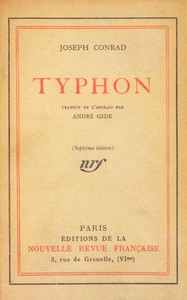
Typhon by Joseph Conrad
Joseph Conrad's Typhoon is a story of man versus nature, and man versus his own nature. It follows Captain Tom MacWhirr, a man of few words and even fewer imaginative leaps, who commands the steamship Nan-Shan. When faced with charts predicting a monstrous typhoon, MacWhirr's first mate, Jukes, begs him to sail around it. But MacWhirr, a man who believes in facts he can see and rules he can follow, dismisses the idea. To him, a storm is just a line on a map to be crossed. He steers his ship and its volatile human cargo—including 200 Chinese coolies being repatriated—directly into the heart of the tempest.
The Story
The plot is deceptively simple. The first half builds a slow, creeping dread as the barometer falls and the sky turns an ugly copper color. Then, the typhoon hits. Conrad doesn't just describe the storm; he puts you in it. You feel the ship groan, taste the salt spray, and hear the shriek of the wind alongside the crew. The real drama unfolds in the aftermath. The coolies' wages, stored in two broken chests, have been scattered and mixed in the chaos. A fight over the money threatens to explode into a riot in the damaged hull. MacWhirr, physically exhausted and mentally strained, must now solve a human problem with the same blunt, methodical logic he applied to the sea. His solution is bizarre, painfully fair, and perfectly in character.
Why You Should Read It
Forget swashbuckling adventure. This is a psychological deep-dive into a fascinatingly ordinary man. MacWhirr isn't a hero; he's competent, stubborn, and frustratingly literal. Conrad asks: in a crisis, is unimaginative steadiness a fatal flaw or the only thing that saves you? The contrast between MacWhirr and his more 'feeling' officers is brilliant. The book also quietly asks big questions about duty, colonialism, and how we treat people we see as 'other,' all while the ship is literally falling apart around the characters. It's incredibly tense and surprisingly funny in its dry, observational way.
Final Verdict
Perfect for anyone who loves a tightly wound, character-driven thriller. If you enjoy stories about flawed men in impossible situations, where the real battle is internal, you'll love this. It's also a great, shorter entry point into Conrad's work if Heart of Darkness feels daunting. Just be prepared—you might never look at a grey sky or a stubborn person the same way again.
This book is widely considered to be in the public domain. Knowledge should be free and accessible.
Sandra Anderson
5 months agoGood quality content.
Elijah King
9 months agoI was skeptical at first, but the flow of the text seems very fluid. I learned so much from this.
Anthony Thompson
1 year agoHelped me clear up some confusion on the topic.
Betty Hernandez
1 year agoEssential reading for students of this field.

Margaret Davis
8 months agoCitation worthy content.