
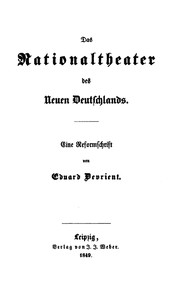
Das Nationaltheater des Neuen Deutschlands. Eine Reformschrift by Eduard Devrient
Published in 1849, right in the turbulent wake of the 1848 revolutions, Eduard Devrient's book is a call to arms. Devrient wasn't just a writer; he was a star actor and stage director who had lived the theater life. He saw a problem: German stages were a mess of imported French plays, shallow entertainments, and no clear identity. With Germany politically fragmented, he believed a unified national theater could be the glue to help create a unified national culture.
The Story
There's no traditional plot here. Think of it as the story of an idea. Devrient lays out a complete plan for a theater that serves the new Germany. He argues for a repertory system focused on German classics (like Goethe and Schiller) and new works that speak to German life. He pushes for serious actor training, a permanent ensemble of dedicated artists (not just stars), and even gets into the nitty-gritty of how such a theater should be funded and organized by the state. The central conflict is between art as mere diversion and art as the essential heartbeat of a nation.
Why You Should Read It
What grabbed me was the sheer conviction. This isn't dry theory; it's a practitioner's dream for his art form. You feel Devrient's frustration with the status quo and his hopeful vision for what theater could achieve. Reading it today, you see the seeds of what later became the famed German state theater system. It makes you think: how does art define a country? His arguments about funding, education, and artistic integrity are debates we're still having about national arts councils and public broadcasting.
Final Verdict
This is a niche read, but a rewarding one. It's perfect for history buffs interested in 19th-century Germany or the roots of modern European theater. It's also great for arts administrators or theater students who want to see where many of our modern ideas about repertory and national culture started. If you enjoy primary sources that let you peer directly into the passionate debates of the past, Devrient's reform pamphlet is a compelling and surprisingly accessible window. Just don't go in expecting a novel—go in expecting a lively, historic conversation about the power of the stage.
Legal analysis indicates this work is in the public domain. Share knowledge freely with the world.
Emily Hernandez
9 months agoI started reading this with a critical mind, the inclusion of diverse viewpoints strengthens the overall narrative. I'll be recommending this to my students and colleagues alike.
Margaret Garcia
8 months agoExtremely helpful for my current research project.
Joseph Miller
1 year agoThis was exactly the kind of deep dive I was searching for, the logic behind each conclusion is easy to follow and verify. The insights gained here are worth every minute of reading.
Mary Hill
1 year agoVery helpful, thanks.








Jessica Thompson
3 months agoRight from the opening paragraph, the way it handles controversial points with balance is quite professional. It’s a comprehensive resource that doesn't feel bloated.