About 313 minutes
The Re-Creation of Brian Kent — Key Ideas to Explore
Historical Psychological Social Fiction
71,848 recorded words. 5 minutes difference from this book's estimate.
View Gutenberg source #3265
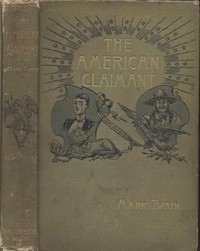
The source record for The American Claimant — Edition Insights measures this digital text at 70,772 words, 5 hr 8 min estimated reading time, and 31 detected text sections.
The text analysis averages about 17.4 words per sentence, while the detected sections provide another way to judge how the source is divided.
Project Gutenberg metadata also associates the work with “Humorous stories,” connecting these edition facts with the source record’s subject description.
Explore this collection
These alternatives are selected using recorded categories and estimated reading time.
About 313 minutes
Historical Psychological Social Fiction
71,848 recorded words. 5 minutes difference from this book's estimate.
View Gutenberg source #3265About 316 minutes
Historical Psychological Social Fiction
72,596 recorded words. 8 minutes difference from this book's estimate.
View Gutenberg source #2813About 298 minutes
Historical Psychological Social Fiction
68,480 recorded words. 10 minutes difference from this book's estimate.
View Gutenberg source #2560Search stored excerpts and compare books → Choose by your preferences →
Choices use stored catalog measurements. Estimates vary with reading speed. A shared category is a catalog label, not a claim that two books have the same argument or literary quality.
Search reads excerpt text stored with this catalog and links to its associated Gutenberg record. The connection is stored in the site database; this tool does not recheck that every excerpt is word-for-word identical to that external record. Excerpt search does not cover every chapter and does not verify historical publication dates.
Catalog snapshot checked: 2026-09-25. Coverage: 93 public books, 93 available source excerpts.
Read the complete public-domain text at its original source.
Read on Project GutenbergMark Twain’s The American Claimant (1892) opens with a transatlantic identity swap: Viscount Berkeley proposes to change places with the American claimant to the Rossmore earldom. The catalog subjects list “mistaken identity” and “humorous stories,” but the excerpts show that the humor arises less from farcical confusion than from pointed debates about class and hypocrisy. In one extended dialogue, the chair-maker Barrow insists that every American—mechanic, lawyer, saint—would grab an earldom if offered, while Tracy (the disguised viscount) softly demurs. Barrow’s scornful repetition of “Except you!” drives home the satire: even those who oppose hereditary nobility would leap at the chance.
The chapter titles telegraph a plot of dueling identities: “The Earl of Rossmore vs. the American Claimant” and “Viscount Berkeley proposes to change places with the Claimant.” But the excerpts reveal that the real tension is not who is the true earl, but what people would do if they could become one. Barrow’s argument—that “anybody that’s alive” would take an earldom—is tested by Tracy’s quiet refusal. The text does not resolve whether Tracy is sincere or dissembling; his “joy” at Barrow’s last remark suggests he is playing a role. The catalog subject “mistaken identity” thus understates the book’s focus on the gap between stated principles and actual desires.
The catalog lists “United States – Social life and customs – 19th century – Fiction,” and the excerpts show this through the character of Colonel Mulberry Sellers. He is introduced with “his art gallery” and a scheme called “Pigs in the Clover.” Mrs. Sellers calls him “the same old scheming, generous, good-hearted, moonshiny, hopeful, no-account failure he always was.” The colonel’s optimism is a recurring detail: he offers an art treasure to propitiate Suggs, nails hatchments on “Rossmore Towers,” and secures three baskets of ashes from a hotel fire to send to England. His relentless invention contrasts with the more philosophical debates about class, suggesting that the book’s humor comes from both verbal sparring and the colonel’s impractical energy.
One of the most sustained excerpts is a debate between Barrow and Tracy at the “Mechanics’ Debating Club.” Barrow argues that a journeyman chairmaker who earns twenty dollars a week has “the good and genuine culture of contact with men,” while Tracy has only “the artificial culture of books.” This is not a simple dismissal of aristocracy; Barrow’s own inconsistency—opposed to hereditary titles but willing to take one—is the target. The dialogue uses repetition (“Except you!”) and escalating scorn to expose the gap between ideology and self-interest. The catalog subject “humorous stories” fits, but the humor here is argumentative and intellectual, not slapstick. The excerpts do not show how this debate resolves, leaving the reader to infer that the book may sustain this ironic tension rather than resolve it.
Readers should pay attention to the rhythm of Twain’s dialogue: the long, looping sentences of Barrow’s arguments and the short, deflating replies of Tracy. The excerpts offer no clear verdict on whether the American claimant is a fraud or a rightful earl, nor whether Tracy will ever reveal himself. The book’s comedy depends on these uncertainties. Approach it as a series of debates and schemes rather than a straightforward plot, and note how Twain uses the mechanics’ club as a stage for class satire that cuts both ways.
Reading about Colonel Sellers and his glorious refusal to let reality dent his earldom reminds me of my grandfather, who spent decades insisting he'd been cheated out of a family fortune. The same giddy, stubborn hope. The Island Pharisees — Text and Context once gave me that identical ache—watching someone cling to a self-invented nobility, knowing the world will never agree with them.
Answer a few questions and save a private reflection on this device.





![Cover of Love and Freindship [sic] — Text and Context](https://aleuy.com/storage/media/covers/pg1212.jpg)



