
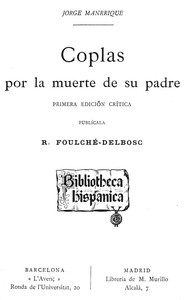
Coplas por la muerte de su padre by Jorge Manrique
Let's be clear: this isn't a novel with a plot in the usual sense. 'Coplas por la muerte de su padre' (Stanzas on the Death of His Father) is a long elegy, a poetic letter from a grieving son. Jorge Manrique wrote it in 1476 following the death of his father, Rodrigo, a respected knight and political figure.
The Story
The poem unfolds in three parts. First, Manrique lays out a timeless truth: life is short and death comes for everyone, from kings to paupers. He paints vivid pictures of grand castles and powerful rulers, now all forgotten and fallen. Then, he makes it personal. He introduces his father, Don Rodrigo, not just as a parent but as a model of virtue, bravery, and loyalty in a turbulent age. The core of the poem is a fictional dialogue where Death itself comes for Rodrigo. But here's the twist: Death is not a scary monster, but almost a respectful messenger. Rodrigo accepts his fate with incredible dignity, seeing death as a welcome rest from life's troubles and a gateway to eternal life. The poem ends with a sense of peaceful closure, celebrating a life well-lived rather than just mourning its end.
Why You Should Read It
I'll admit, I approached this as a 'classic' I had to get through. I was stunned by how it grabbed me. Manrique's grief feels immediate. When he lists all the worldly things that fade—beauty, strength, riches—it hits hard in our own achievement-obsessed world. His father's calm conversation with Death is one of the most powerful scenes I've ever read in poetry. It reframes dying not as a defeat, but as a natural, even noble, transition. This poem cuts through the noise and asks the big questions: What do we leave behind? What makes a life good? It finds hope not in avoiding death, but in living with honor. It’s profound without being preachy.
Final Verdict
Perfect for anyone who's ever lost someone and wrestled with big questions about life's purpose. It's also a great, short entry point for readers curious about classic Spanish literature but intimidated by longer works like 'Don Quixote.' If you enjoy poetry that's direct, philosophical, and emotionally powerful—think of it as a medieval meditation—you will find this incredibly rewarding. Just be sure to get a good translation with facing-page Spanish if you can; even a glimpse at the original language shows the beautiful, rhythmic craft. It's a quiet, monumental piece of art.
This masterpiece is free from copyright limitations. Distribute this work to help spread literacy.
Richard Thomas
9 months agoThe digital formatting makes it very easy to navigate.
Margaret Moore
1 year agoThe peer-reviewed feel of this content gives me great confidence.
Kimberly Gonzalez
4 months agoI decided to give this a try based on a colleague's recommendation, the critical analysis of current industry standards is very timely. Thanks for making such a high-quality version available.
Sarah White
10 months agoI was skeptical about the depth of this book at first, but the objective evaluation of the pros and cons is very refreshing. I appreciate the effort that went into this curation.