
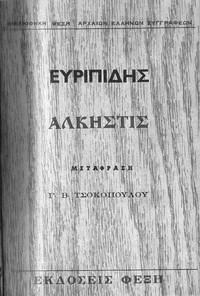
Άλκηστις by Euripides
So, here's the setup. King Admetus is fated to die young. The god Apollo, owing him a favor, brokers a deal with the Fates: Admetus can live if he finds someone willing to die for him. He asks everyone—his elderly parents, his friends—and they all refuse. The only person who says yes is his wife, Alcestis. As the play opens, she is fulfilling her promise, preparing to die so her husband can live.
The Story
The play shows us Alcestis's noble farewell and her death. We then see Admetus's immediate, crushing guilt. His father shows up and they have a blistering argument about courage and selfishness, which is one of the rawest scenes in ancient drama. Just as the palace is plunged into mourning, the hero Heracles arrives for a visit. Admetus, bound by sacred hospitality laws, can't turn him away. He hides the truth and tells Heracles it's a distant relative who died, encouraging him to eat, drink, and be merry. Heracles, once he discovers the deception, is so moved by his friend's loyalty (and perhaps shamed by his own drunkenness) that he decides to repay the favor. He goes to the tomb, wrestles the god Death, and brings Alcestis back to life.
Why You Should Read It
This play gets under your skin because it refuses easy answers. Alcestis's sacrifice is presented as the ultimate act of love, but Euripides forces us to sit with Admetus's shame and his father's scorn. Is Admetus a coward or a man granted an impossible gift? The dialogue between Admetus and his father Pheres is brutally honest family drama. Then, Heracles crashes in and turns the mood on its head. His section is almost a comedy—a reminder that life is messy and solutions aren't always pretty. The ending isn't a simple 'happily ever after.' Alcestis returns silent and veiled, leaving us to wonder about the cost of her journey back.
Final Verdict
This is the perfect 'starter' Greek tragedy. It's short, the plot is straightforward, and it mixes deep emotion with moments of unexpected humor. If you're curious about ancient plays but worry they'll be too heavy or confusing, start here. It's also fantastic for anyone who loves stories about tough moral choices and complicated relationships. You'll finish it in an afternoon, but the questions it raises about love, duty, and what we bargain for with our lives will stick with you for much longer.
The copyright for this book has expired, making it public property. You can copy, modify, and distribute it freely.
Carol Wilson
1 year agoI stumbled upon this title and it manages to explain difficult concepts in plain English. One of the best books I've read this year.
Susan Nguyen
1 year agoI came across this while browsing and the atmosphere created is totally immersive. Definitely a 5-star read.
Liam White
1 year agoFast paced, good book.
Emma Smith
5 months agoThis book was worth my time since the flow of the text seems very fluid. One of the best books I've read this year.




Elizabeth Miller
1 year agoI stumbled upon this title during my weekend research and the visual layout and supporting data make the reading experience very smooth. I'm genuinely impressed by the quality of this digital edition.