
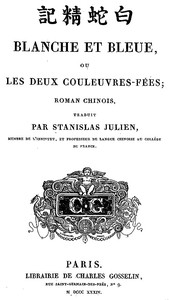
Blanche et Bleue ou les deux couleuvres-fées, roman chinois by Stanislas Julien
Picking up a book where the author is listed as 'Unknown' feels like finding a secret letter. Blanche et Bleue ou les deux couleuvres-fées is exactly that—a secret, passed through time and translation. Originally a Chinese novel, it was brought to Western readers in the 1800s by the French scholar Stanislas Julien. It sits at this fascinating crossroads: an old Eastern tale filtered through a 19th-century European lens. The result is a story that feels timeless and slightly dreamlike.
The Story
The plot centers on two serpent spirits, Blanche (White) and Bleue (Blue). They aren't monstrous beasts but powerful, intelligent beings, more like fairy creatures. Their peaceful existence in the spirit world gets disrupted when they become involved with humans. The story follows their journeys—sometimes separate, sometimes intertwined—as they navigate human emotions, societal rules, and their own magical natures. They might help a worthy scholar, test a lover's devotion, or simply observe the mortal world with a mix of curiosity and pity. The central tension isn't a loud, epic battle, but a quieter one: what is the cost of connection between two completely different kinds of beings?
Why You Should Read It
This book charmed me because it doesn't shout; it whispers. The magic is woven into everyday life. A serpent might transform into a beautiful scholar to debate poetry, or use its powers to quietly right a small wrong. It’s less about special effects and more about the idea of magic as a natural, if hidden, part of the world. The characters, both human and spirit, are driven by recognizable feelings—longing, loyalty, curiosity—which makes their extraordinary situations deeply relatable. Reading it, you get a double gift: a compelling old myth and a glimpse into how such stories traveled and transformed in the past.
Final Verdict
This is a perfect pick for readers who love myth and folklore, especially those curious about tales outside the well-trodden European paths. It’s for anyone who enjoys stories where the fantasy is elegant and understated, and where the mystery of the 'Unknown' author only deepens the enchantment. If you liked the spirit of Strange Tales from a Chinese Studio or the atmospheric feel of some of Lafcadio Hearn's collected Japanese ghost stories, you’ll find a kindred spirit here. It’s a short, transporting read that proves some stories, no matter how old or where they’re from, have a magic that never fades.
This title is part of the public domain archive. Knowledge should be free and accessible.
Donald White
1 month agoIt’s rare to find such a well-structured narrative nowadays, the way it challenges the status quo is both daring and well-supported. Definitely a five-star contribution to the field.





Michael Moore
2 years agoRight from the opening paragraph, the emphasis on ethics and sustainability within the topic is commendable. A solid investment for anyone's personal development.